Source Anti Parvovirus Canine Antibody for Diagnosis, Testing, and Research
Find 23 anti parvovirus canine antibody products for rapid diagnosis, laboratory immunoassays, and veterinary research. Compare liquid reagents, detection cards, and test kits with varying shelf lives and storage requirements to select the right solution for your needs; compare the available evidence and request quotations based on your requirements.
Key considerations
Products List


Comprehensive Sourcing Guide
Anti Parvovirus Canine Antibody Sourcing Guide
Procuring anti-parvovirus canine antibody reagents requires a disciplined approach to ensure diagnostic accuracy and supply chain reliability. Buyers must navigate a market where products vary significantly in form, application, and intended specimen type. The core keyword highlights a specific diagnostic need, yet the available inventory includes liquid reagents, rapid detection cards, and specialized antigen-antibody pairs. Understanding these distinctions is critical for aligning procurement with laboratory workflows or field testing requirements.
This guide provides evidence-based sourcing strategies for veterinary diagnostic manufacturers and clinical laboratories. It focuses on verifying technical specifications, understanding commercial terms, and ensuring supplier compliance. By adhering to the observed market signals and standard verification protocols, buyers can mitigate risks associated with inconsistent product quality or non-compliant documentation. The following sections detail the essential steps for evaluating suppliers and selecting the appropriate anti-parvovirus canine antibody solutions for specific operational needs.
Product Scope and Observed Listing Signals
The current market for anti-parvovirus canine antibody products exhibits a wide range of formats, from liquid immunoassay reagents to rapid detection cards. Listings indicate that products are suitable for adult and elderly subjects, though in veterinary contexts, this typically refers to canine age groups or general applicability. The observed supply types include Original Brand Manufacturing (OBM), suggesting that many suppliers offer private labeling or custom branding options. This customization availability is a key signal for buyers seeking to establish their own diagnostic brand identity in the competitive veterinary market.
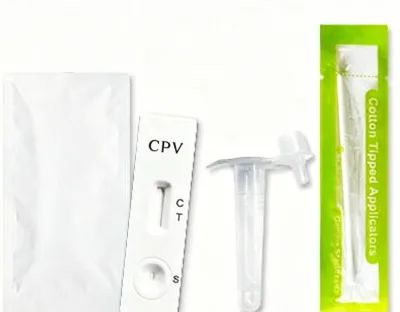
Observed product attributes reveal diverse applications, including diagnosis, immunoassay reagents, and rapid tests for Parvovirus (CPV/CCV). Specimen types vary significantly, with some products designed for serum, plasma, or whole blood, while others are optimized for feces or vomit samples. This divergence necessitates careful selection based on the intended testing environment. For instance, rapid cards may be preferred for field use due to their ease of use, whereas liquid reagents might be better suited for high-throughput laboratory settings requiring precise quantification or specific assay formats.
Technical Specifications to Verify
Buyers must rigorously verify technical specifications to ensure compatibility with existing diagnostic platforms. Key attributes to confirm include the product form, which is often listed as liquid, and the storage requirements, typically ranging from 2-8 degrees Celsius for reagents to 2-30 degrees Celsius for rapid test kits. Shelf life is another critical factor, with observed ranges spanning from 18 to 24 months. Verifying these parameters ensures that the products remain stable and effective throughout the supply chain, preventing waste due to premature expiration or improper storage conditions during transit.
Sensitivity and specificity data are paramount for diagnostic accuracy. Some listings cite high specificity, such as 100%, and sensitivity levels around 97.60%, with overall accuracy claims near 99%. Buyers should request detailed validation data for these metrics rather than relying solely on marketing summaries. Additionally, assay time is a practical consideration, with rapid tests often completing in 5-10 minutes. Confirming these performance metrics against independent laboratory results or certified reference materials is essential to guarantee that the anti-parvovirus canine antibody products meet the required diagnostic standards for clinical or commercial use.
Compliance and Safety Documentation
Ensuring regulatory compliance is a fundamental requirement for sourcing diagnostic reagents. Buyers must verify that suppliers adhere to relevant international and local standards for In Vitro Diagnostic (IVD) devices. While specific certification statuses may vary by region, suppliers should provide documentation demonstrating compliance with quality management systems such as ISO 13485. This ensures that the manufacturing processes for anti-parvovirus canine antibody products are consistent, controlled, and capable of producing safe and effective diagnostic tools for veterinary use.
Safety data sheets (SDS) and material safety information are also critical components of the procurement package. Since many products are for external use or involve biological specimens, proper handling instructions must be clearly documented. Buyers should confirm that the packaging and labeling comply with hazardous material transport regulations, especially for liquid reagents that may require cold chain logistics. Verifying these documentation requirements upfront helps prevent customs delays and ensures that the products can be safely stored and used in accordance with laboratory safety protocols.
Cost Drivers and Commercial Terms
Several factors influence the total cost of ownership for anti-parvovirus canine antibody products. The minimum order quantity (MOQ) is a significant driver, with observed ranges from 1 to 1000 units, and specific listings indicating MOQs of 20 boxes. Buyers must balance inventory holding costs against the economies of scale offered by larger orders. Additionally, packaging formats, such as bottles or boxes containing 10 tests, affect unit pricing and logistical efficiency. Understanding these commercial terms allows buyers to optimize their procurement strategy and align order sizes with their consumption rates.
Payment terms and delivery times also impact financial planning and operational continuity. Common payment methods include Telegraphic Transfer (T/T), PayPal, and Western Union, offering flexibility for international transactions. Delivery times vary, with some suppliers offering rapid turnaround of 1-7 days, while others specify 3-5 days after payment receipt. Buyers should negotiate clear terms regarding shipping responsibilities, insurance, and potential penalties for delayed deliveries. Establishing these commercial parameters early in the sourcing process helps avoid unexpected costs and ensures a reliable supply of critical diagnostic reagents.
Supplier Qualification and Quality Control
Supplier qualification is a critical step in mitigating supply chain risks. Buyers should conduct thorough due diligence to assess the supplier’s manufacturing capabilities, quality control processes, and track record in the IVD industry. Given that many suppliers offer Original Brand Manufacturing (OBM) services, it is essential to verify their ability to maintain consistent product quality across different batches. This includes reviewing their quality management system certifications and conducting on-site audits or third-party inspections if feasible.
Quality control measures should extend to incoming inspection protocols for the anti-parvovirus canine antibody products. Buyers must establish clear acceptance criteria based on the technical specifications provided by the supplier, including purity levels, such as 96%, and assay performance metrics. Implementing a robust quality control process helps identify any deviations from the agreed-upon standards before the products are integrated into the supply chain. Regular communication with suppliers regarding quality issues and continuous improvement initiatives is also vital for maintaining long-term product reliability.
Long-Term Procurement Checks
Long-term procurement success depends on continuous monitoring of supplier performance and product stability. Buyers should establish key performance indicators (KPIs) to track delivery reliability, product quality, and responsiveness to issues. Regular reviews of these metrics help identify potential supply chain disruptions or quality degradation over time. Additionally, staying informed about regulatory changes and emerging diagnostic technologies ensures that the procured anti-parvovirus canine antibody products remain relevant and compliant with evolving industry standards.
Building a diversified supplier base can also enhance supply chain resilience. Relying on a single source for critical reagents poses significant risks, so buyers should consider qualifying multiple suppliers for similar products. This strategy provides flexibility in case of production delays or quality issues with a primary supplier. Furthermore, maintaining open lines of communication with suppliers fosters collaboration and facilitates the adoption of new innovations or improvements in product design. By proactively managing these long-term procurement checks, buyers can ensure a stable and efficient supply of high-quality diagnostic reagents.
FAQs
What is the shelf life of the anti parvovirus canine antibody reagents?
The shelf life varies by product type, ranging from 18 months to 24 months depending on the specific model. Some liquid reagents are stored at 2-8 degrees Celsius, while detection cards may be stored between 2-30 degrees Celsius to ensure stability during transport and use.
Can I customize the anti parvovirus canine antibody packaging and specifications?
Yes, customization is available for packaging and specifications to meet your specific requirements. Products come in various formats like bottles or boxes, with options for 10 tests per box or bulk carton packing, allowing flexibility for different order volumes and distribution needs.
Which suppliers offer anti parvovirus canine antibody with fast delivery times?
Suppliers typically offer delivery times ranging from 1 to 7 days after payment confirmation. Specific models may have a standard delivery window of 3 to 5 days, ensuring quick turnaround for urgent diagnostic needs while maintaining quality control standards throughout the shipping process.
How is the anti parvovirus canine antibody stored and what is the purity?
Storage conditions depend on the product form, with liquid reagents requiring 2-8 degrees Celsius and cards stored at 2-30 degrees Celsius. The purity of the antibody reagents is typically around 96%, ensuring high reliability for diagnostic applications in veterinary settings.
What are the minimum order quantities for anti parvovirus canine antibody products?
Minimum order quantities vary significantly, ranging from 1 unit up to 1000 units depending on the supplier and product type. Specific listings indicate a standard MOQ of 20 boxes for certain reagent kits, while other options may accommodate smaller trial orders for new buyers.
Can the anti parvovirus canine antibody be used for external diagnosis only?
Yes, the product is designed for external use in diagnostic procedures. It serves as an immunoassay reagent for detecting antibodies or antigens, suitable for testing serum, plasma, whole blood, or feces samples to confirm parvovirus infection in canine patients effectively.
What payment methods are accepted for anti parvovirus canine antibody orders?
Accepted payment methods include T/T, PayPal, and Western Union to facilitate secure transactions. These options provide flexibility for international buyers, ensuring that orders can be processed efficiently while adhering to standard financial security protocols for B2B medical supply transactions.